Starting an LPG Gas Dealership: What It Really Costs, How It Earns, and What to Check First
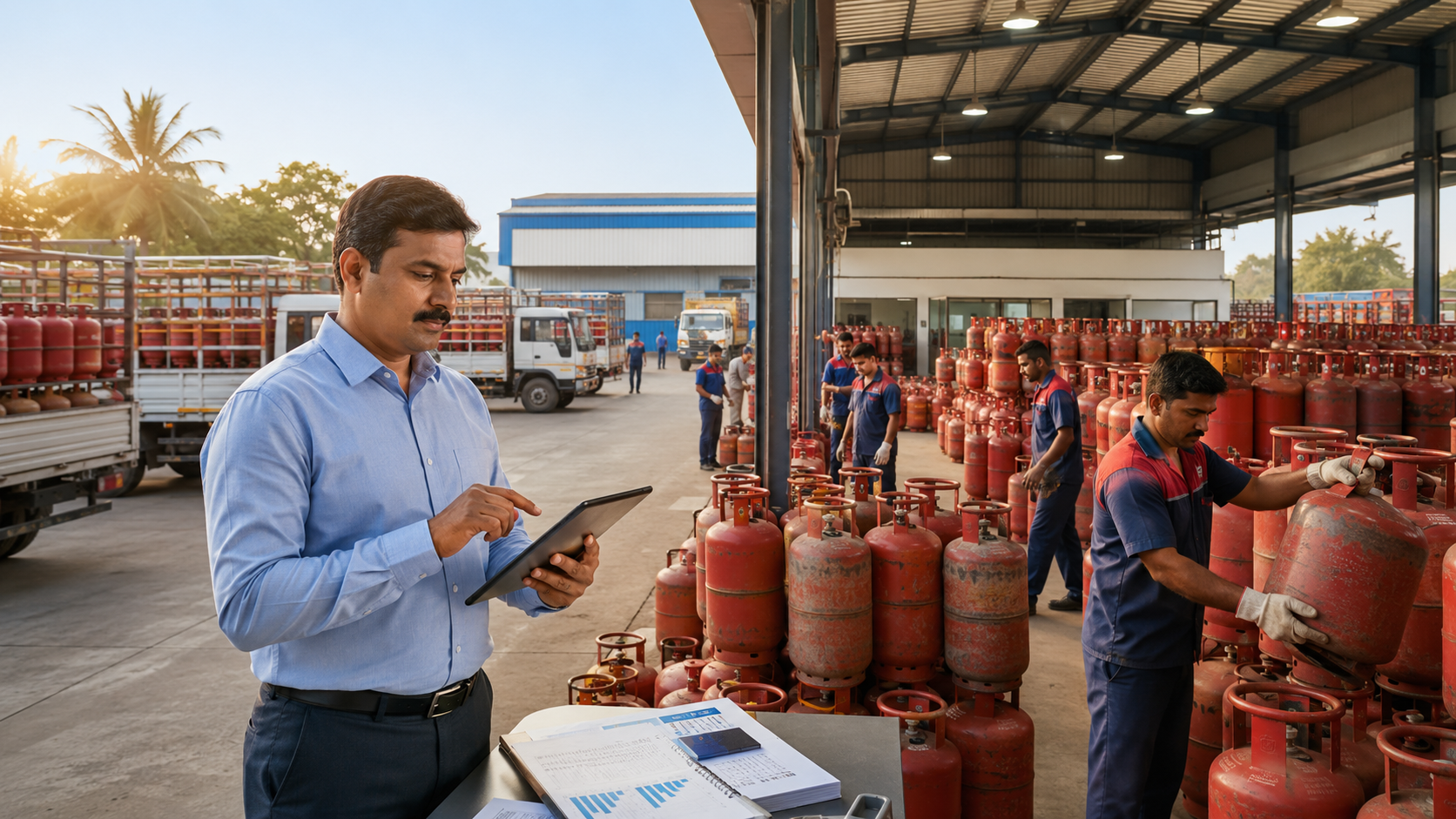
LPG distribution keeps drawing investor interest for a simple reason — it's an essential-service business, not a trend-dependent one. As new domestic, commercial, and institutional connections keep getting added across India, the network required to deliver LPG safely and reliably keeps growing with it. But before signing up for an LPG gas dealership, it helps to look past the headline investment and profit numbers and understand the licensing, infrastructure, and operational demands that actually shape how the business performs over time.
Why This Business Keeps Attracting Investors
LPG isn't a seasonal or trend-driven product — it serves a basic need across households, businesses, and institutions alike. Every new domestic connection eventually becomes recurring refill demand, which sets distribution apart from businesses that live and die by constantly acquiring new customers.This steady demand is reinforced by India's continuously expanding LPG consumer base and distribution network. Even as market conditions shift operating costs or margins, the underlying need for LPG stays tied to everyday cooking and commercial activity — it doesn't disappear.That said, demand alone isn't the whole picture. An LPG dealership sits inside a tightly regulated framework, where infrastructure, safety compliance, and logistics matter just as much as market size in determining how the business performs long-term.
How the Business Actually Works
A dealership operates as the authorised link between the LPG supplier and the end consumer — it doesn't manufacture anything. Its job is to receive cylinders, run approved storage facilities, process bookings, and get cylinders delivered safely within its assigned area.Because the model runs on recurring relationships rather than one-off sales, once a household or business enters the network, the dealership keeps servicing that connection through repeat refills. That makes operational consistency and delivery reliability central to how well the business performs over time.
What the Investment Actually Involves
The question every prospective dealer asks first is how much capital is needed. The honest answer is that it depends on dealership category, location, and supplier norms — but the total cost goes well beyond the application fee itself.Land and site: Every dealership needs land that meets prescribed safety and operational standards, covering storage, vehicle movement, admin space, and customer-facing area. Site suitability gets checked against regulatory norms before operations can even start.Storage and safety setup: Since LPG is a hazardous fuel, storage has to meet strict safety regulations — approved storage structures, firefighting equipment, signage, boundary protection, and emergency response arrangements are core setup costs, not extras.Vehicles and equipment: Delivery vehicles, cylinder-handling gear, weighing equipment, office setup, and booking/record-keeping systems all factor into the scale of operations you're running.Working capital: Beyond the initial build-out, ongoing costs — salaries, vehicle upkeep, fuel, admin overheads, and customer service — run continuously. Factoring these in gives a far more realistic investment picture than looking at setup cost alone.
Where the Revenue Actually Comes From
Once a consumer base is registered, income flows from a few distinct sources.Distributor commission: This is the core revenue stream — commission on every cylinder sold and refilled, set by the supplying company and periodically revised to reflect cost changes. Since it's tied directly to refill volume, business performance tracks closely with how many cylinders move through the dealership.New connections: Registering new consumers within the assigned service area adds another revenue layer, particularly in areas seeing residential or commercial growth.Accessories and add-ons: Regulators, hoses, cooking appliances, and other approved products bring in smaller but steady supplementary income, alongside adding convenience for customers.
What Actually Drives Profitability
Profit depends on more than the initial outlay or per-cylinder commission — it comes down to how well the operation is run day to day.Customer base size: More active consumers means higher, steadier refill volumes and more predictable revenue than one-off transactions could ever provide.Operational efficiency: Tight inventory management, well-planned delivery schedules, and well-maintained vehicles keep costs down and service quality up.Territory: Areas with residential or commercial growth, or rising LPG adoption, naturally offer stronger long-term demand than static markets.Retention: Since this is a recurring-consumption business, keeping existing customers matters as much as adding new ones — reliable delivery and responsive service are what keep people coming back to the same dealership.
What to Check Before You Commit
Before investing, it's worth evaluating the opportunity from several angles rather than just the projected numbers: the market potential of your proposed service area, whether the site and infrastructure can actually meet regulatory standards, the full capital picture including working capital (not just setup cost), the licensing and statutory obligations involved, and whether you have the operational capacity to manage logistics, inventory, and customer service well.
The Real Question to Ask
Investment figures, commission structures, and projected returns are the measurable part of an LPG dealership — but they're not the whole story. What actually determines long-term success is whether the operator can run a dependable, compliant, well-managed distribution point day after day. For anyone weighing an LPG gas dealership, the better question isn't just how much it can earn, but whether you're ready to handle everything that comes with running it.
